September 16, 2026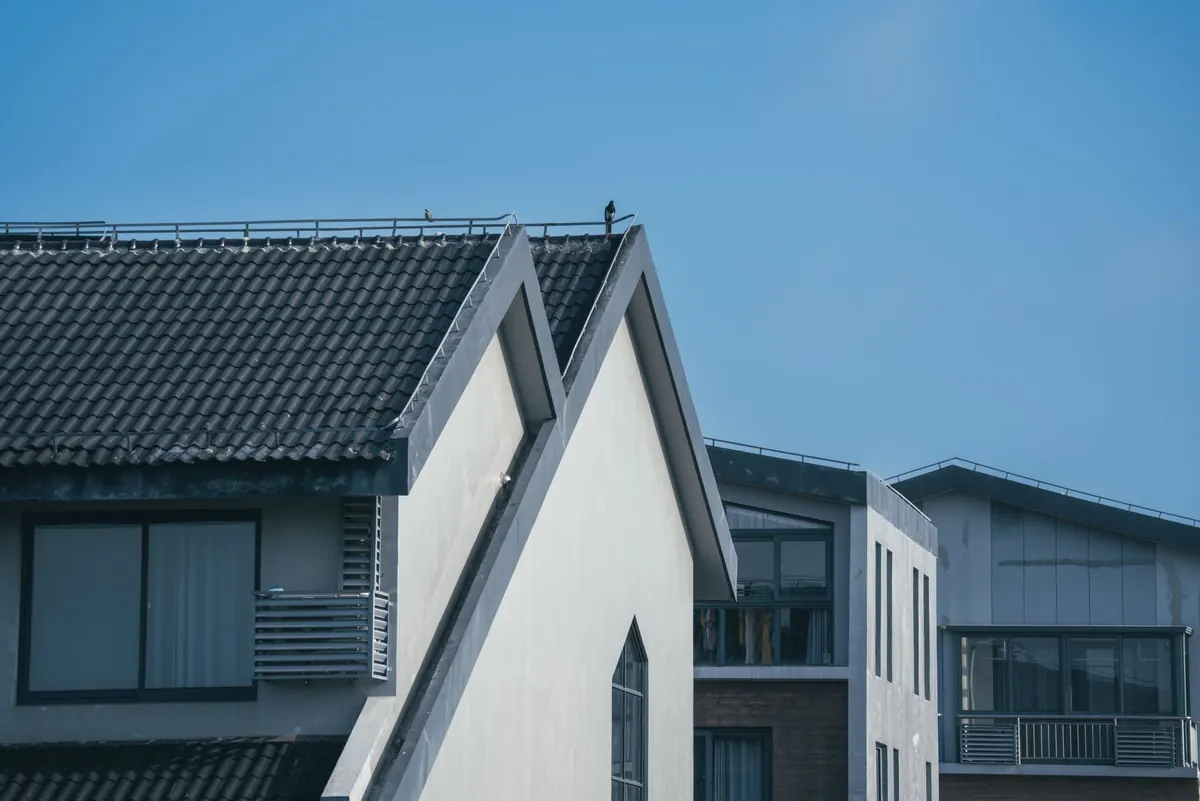
If you are planning an extension, replacing a tired garage roof, or buying a house where the surveyor has raised an eyebrow at the roof over the back door, the flat versus pitched question usually comes down to three things: the building, the budget, and how long you intend to live with the result.
Neither type is automatically better. Both perform well when they are designed, detailed and built properly, and both fail early when they are not. What matters is matching the roof to the job, so here is how the two compare on UK homes.
What "flat" and "pitched" really mean
A pitched roof slopes, usually at 30 to 50 degrees, though most UK houses sit somewhere between 35 and 45. The steeper the pitch, the faster water sheds, and the more freedom you have with covering. Plain clay tiles and natural slate generally want a steeper pitch; interlocking concrete tiles can go lower; profiled metal sheets lower still. Below about 20 degrees you are into the territory of "low pitch" systems with special underlays and hidden fixings, and below that you may as well stop pretending it is a pitched roof at all.
A flat roof is never truly flat. It carries a designed fall, typically somewhere between 1:40 and 1:80, so that water runs towards a gutter, an outlet or an internal drain. A genuinely level roof is just a pond with a waterproof lining. There are two common constructions: a cold deck, where insulation sits below the deck with ventilation above it, and a warm deck, where the insulation goes on top of the deck and the waterproof layer sits above that. Warm decks have become the default for most domestic work because they sidestep the condensation and rot problems that made older cold-deck flat roofs so notorious.
The materials you are actually choosing between
- Pitched: concrete tiles, clay tiles, natural slate, metal sheeting, and occasionally shingles.
- Flat: EPDM rubber, GRP fibreglass, single-ply membranes, and the older, cheaper reinforced bitumen felt.
Each has its own maintenance habits, and the covering matters more than the shape when it comes to lifespan.
How the costs compare
On day one, a flat roof is usually the cheaper option per square metre. It uses less timber, fewer fixings and far less labour, and there are no ridge tiles, valleys or complicated leadwork to pay for. As a rough guide for a modest domestic roof, you might expect something in the region of £60 to £110 per square metre for a flat roof depending on the membrane, against £80 to £180 per square metre for a tiled or slated pitched roof, with natural slate sitting at the top of that range.
Those figures are indicative and vary a great deal by region, access and complexity. The important point is that the gap narrows, and sometimes reverses, once you spread the cost over the life of the roof.
A cheap flat roof is the most expensive roof you will ever buy, because you tend to buy it three times.
Lifespan and maintenance
This is where the two really diverge. A well-installed pitched roof with concrete tiles might give you 50 years; clay tiles and slate can comfortably outlive the people who fitted them. Maintenance is occasional: clearing gutters, replacing the odd slipped tile, repointing the ridge after a storm.
- Reinforced bitumen felt: 10 to 15 years, sometimes less if poorly laid.
- GRP fibreglass: 20 to 30 years, but unforgiving of poor detailing.
- Single-ply membrane: 20 to 30 years with a decent installation.
- EPDM rubber: 20 to 40 years and beyond, and it copes well with thermal movement.
Flat roofs also demand a little more attention. Outlets block with leaves and moss, standing water finds weak seams, and UV light slowly degrades cheaper materials. A ten-minute check twice a year, ideally in autumn and spring, will add years to the life of one.
Weather, water and the British climate
Pitched roofs handle rain almost effortlessly, which is why they dominate in wet, windy places. Their weaknesses are wind uplift, storm damage, and moss growth in shaded, damp spots. Flat roofs have the opposite profile: they resist wind well because they present a low profile, but they ask more of their waterproofing. Water sits on them rather than leaving immediately, so every joint, upstand and outlet has to be right. Snow load is rarely a problem on a domestic flat roof, but ponding is a genuine one, and it is nearly always caused by insufficient fall rather than by the membrane itself.
Space, light and headroom
A pitched roof gives you a loft, and a loft can become a bedroom, a study or a very good place to put the water tank and a lot of boxes. A flat roof gives you different things: full headroom across the entire footprint of an extension, a place for a large rooflight, and the possibility of a roof terrace or a sedum roof.
Consider the practical example of a single-storey rear extension. A pitched roof at 40 degrees on a three-metre-deep extension adds well over a metre of extra height at the ridge. If you are trying to stay within permitted development, or you have a neighbour's window to think about, a flat roof with a discreet parapet or fascia often wins on height alone. In a garden office or garage the same logic applies in reverse: permitted development limits such buildings to 3 metres overall with a flat roof but 4 metres with a dual-pitched roof, which is often the difference between a usable space and a cramped one.
Planning permission and building regulations
In most cases you do not need planning permission for a like-for-like roof replacement, and both roof types can fall within permitted development for extensions and outbuildings. The exceptions matter, though. Listed buildings, conservation areas and Article 4 directions can all restrict what you are allowed to do, and in some areas a flat roof on a street of pitched roofs will simply not be approved.
Building regulations apply to both. Approved Document L covers insulation and thermal performance, and flat roofs often need more insulation to hit the same U-value because there is less depth to play with. Approved Document H covers drainage, which is where flat roof falls, outlets and overflow provision get scrutinised. If you are replacing more than a small area of roof covering, expect the work to be notifiable, and expect the building control officer to want to see the rainwater goods properly sized.
Which should you choose?
Work through these in order, and the answer usually falls out on its own.
- Height limits. If a pitched roof would breach permitted development, block a neighbour's light or break a boundary agreement, go flat.
- Visual context. If the roof is visible from the street and everything around it is pitched, a pitched roof will look like it belongs.
- Intended lifespan. If this is your forever home, a pitched roof in slate or clay will almost certainly be the better long-term buy.
- Usable space. Want a roof terrace, a green roof or solar panels you can reach easily? Flat. Planning a loft conversion later? Pitched.
- Budget and timing. If money is tight now and the roof is hidden from view on a garage or porch, a good flat roof system is a perfectly respectable choice.
Choose the roof you would still be happy with in twenty years, not the one that is cheapest to fit this spring.
Questions to ask before you sign anything
- What fall will the flat roof have, and how will you check it has been maintained?
- Is this a warm deck or a cold deck, and how is it ventilated?
- What is the guaranteed lifespan of the covering, and is the guarantee insurance-backed?
- How will the roof meet the existing wall, and what flashing or leadwork is included?
- Who is responsible for building regulations approval, and is that cost in the quote?
The bottom line
Flat and pitched roofs are both perfectly good answers; they just answer different questions. A well-built flat roof in EPDM or single-ply will outlast a badly built pitched roof by decades, and a pitched roof in the wrong place will look like a mistake for as long as you own the house. Match the roof to the building, the budget and your plans, then spend your energy making sure whoever fits it understands the details. That, far more than the angle of the slope, is what determines how you feel about it in fifteen years' time.
Photo: 女子 正真 / Pexels